

Changing your HVAC filter is the cheapest, easiest maintenance task in your house. It takes about five minutes and costs $5 to $40. Yet a clogged filter is behind a huge number of no cool calls every summer.
So how often to change your HVAC filter? For most homes with standard 1 inch filters, every 1 to 3 months. Thicker filters last longer, and homes with pets or allergies need more frequent changes. Here’s how to find the right schedule for your house.
Quick Filter Change Schedule
| Filter Type or Situation | How Often to Change |
|---|---|
| Cheap 1 inch fiberglass filter | Every 30 days |
| 1 inch pleated filter, no pets | Every 60 to 90 days |
| 1 inch pleated filter, one dog or cat | Every 45 to 60 days |
| Multiple pets or allergy sufferers | Every 30 to 45 days |
| 2 inch pleated filter | Every 3 months |
| 4 to 5 inch media filter | Every 6 to 12 months |
| Vacation home or light use | Every 6 to 12 months, check regularly |
| During construction or wildfire smoke | Check weekly, replace as needed |
The schedule is a starting point. The real rule is simple: check it monthly. ENERGY STAR recommends inspecting your filter every month and notes that airflow problems can reduce a system’s efficiency by up to 15 percent. If you can’t see light through it, or it looks gray and dusty, change it.
Why Changing Your Filter Matters
- Airflow. Your blower has to pull air through the filter. A clogged one chokes the system.
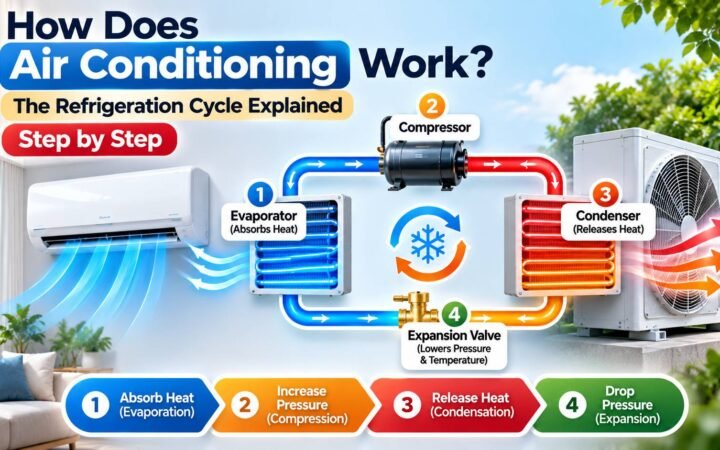
- Frozen coils. Low airflow can make the evaporator coil ice up, which stops cooling completely.
- Overheating furnaces. Restricted airflow can trip the furnace’s high limit switch and shut off heat.
- Energy bills. A struggling system runs longer and costs more.
- Indoor air. A good filter catches dust, pet dander and pollen before it circulates again.
A quick example: if you spend $150 a month on heating and cooling and a dirty filter drops efficiency by 10%, that’s about $15 a month, or $180 a year. A pack of four pleated filters costs about $40.
How to Change an HVAC Filter in 6 Steps
- Turn off the system at the thermostat so the blower isn’t running.
- Find the filter. It’s usually in a slot next to the furnace or air handler, or behind a large return grille in a wall or ceiling.
- Note the size and direction. The size is printed on the frame, like 16x25x1. Look for the airflow arrow.
- Slide out the old filter and bag it to keep dust contained.
- Insert the new filter with the arrow pointing toward the furnace or blower, in the direction air flows.
- Close the cover, turn the system back on and write the date on the filter frame with a marker.
Tip: set a recurring reminder on your phone, or buy a year’s supply so you always have one ready.
Which Filter Should You Buy?
Filters are rated by MERV, from 1 to 16 for most home use. Higher numbers catch smaller particles.
| MERV Rating | What It Catches | Typical Price (1 inch) |
|---|---|---|
| 1 to 4 | Large dust and lint | $2 to $5 |
| 5 to 8 | Dust, pollen, mold spores, pet dander | $6 to $15 |
| 9 to 12 | Finer dust and some smoke particles | $12 to $25 |
| 13 | Very fine particles, including many smoke and some virus carrying particles | $18 to $35 |
For most homes, a MERV 8 to 11 pleated filter is the sweet spot. If you want better air cleaning, a MERV 13 filter helps, but check with an HVAC tech first. A very dense filter in a 1 inch slot can restrict airflow on some systems. A 4 inch media cabinet lets you use MERV 13 without that problem.
The EPA notes that upgrading your furnace or HVAC filter can improve indoor air quality, but it can’t remove all pollutants. It works best alongside reducing pollution sources and ventilating with clean outdoor air.
Common Filter Mistakes
- Installing the filter backwards
- Buying the wrong size and leaving gaps around the edges
- Using two filters at once, at the return grille and the furnace
- Choosing the highest MERV possible without checking airflow
- Washing and reusing disposable filters
- Forgetting that some homes have more than one return filter
Signs Your Filter Needs Changing Now
- It’s visibly gray, dusty or bowed in the middle
- More dust is settling on furniture
- Weak airflow from vents
- The system runs longer than usual
- Ice on the indoor coil or refrigerant line in summer
Bottom Line
How often to change your HVAC filter comes down to your filter type and household. Check it every month, plan on 1 to 3 months for standard 1 inch filters and up to a year for thick media filters. It’s a five minute job that protects your comfort, your energy bills and your equipment.
Frequently Asked Questions
How often should I change my HVAC filter with pets?
With one pet, aim for every 45 to 60 days. With several pets or allergies, every 30 to 45 days is safer.
What happens if I don’t change my HVAC filter?
Airflow drops, bills rise and the system works harder. It can freeze the AC coil or overheat the furnace and cause breakdowns.
Which way does the arrow go on an HVAC filter?
The arrow points in the direction of airflow, toward the furnace or blower and away from the return grille.
Is a higher MERV filter always better?
Not always. Very dense filters can restrict airflow in some systems. MERV 8 to 11 suits most homes. Ask a tech before going higher.
Can I vacuum and reuse my HVAC filter?
Only if it’s labeled washable or reusable. Disposable pleated and fiberglass filters should be replaced, not cleaned.
Do I need to change the filter in winter too?
Yes. Your furnace or heat pump uses the same filter, so keep changing it on schedule all year long.